
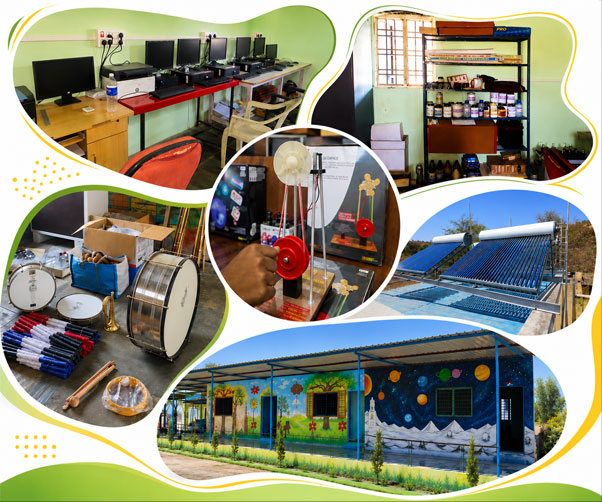
In rural and semi-urban India, a school is never just four walls and a blackboard. It’s the heartbeat of a village. When a school thrives, families thrive. When children learn, communities grow. That’s the idea behind Sarthak Shashwat —
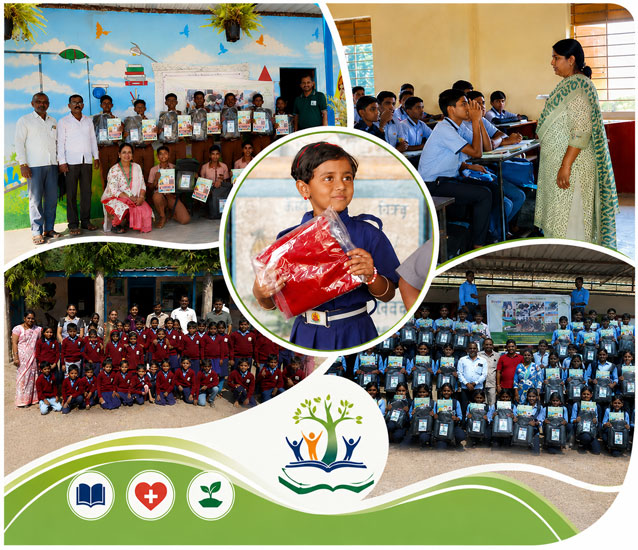
Project Shashwat believes that no child should miss school because they lack basic essentials. Under the Educational Aid initiative, we support students from underserved communities with complete learning kits to help them attend school with dignity and confidence. Each child receives a sturdy school bag, school kit with pens, pencils, scales and erasers, a colour kit to spark creativity, textbooks and notebooks for the full academic year, and seasonal essentials like sweaters, caps, and umbrellas so that weather is never a barrier to learning. By taking care of these small but critical needs, Sarthak Shashwat ensures that students can focus on what truly matters — their education, their dreams, and their future.
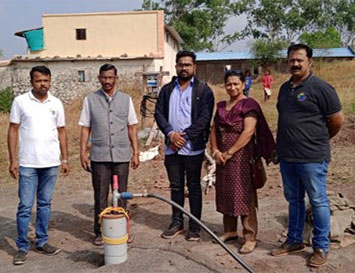
Water scarcity hits schools and farms alike. Shashwat promotes rainwater harvesting structures, recharge pits and soakaways on school campuses. Students run "Jal Doot" campaigns to teach water budgeting. Native low-water plants are used in school gardens.
Single-use plastic is replaced with a culture of reuse. Schools go plastic-free with cloth bags, steel bottles, and waste segregation units. Children lead street plays and door-to-door drives in the village to phase out plastic and set up collection points for recycling.
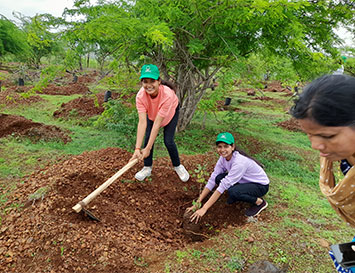
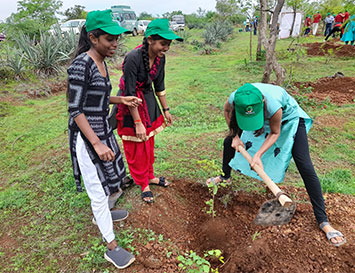
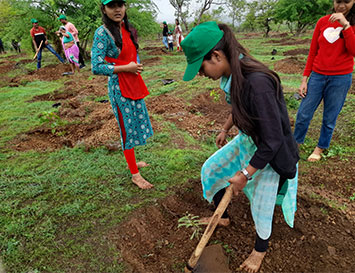
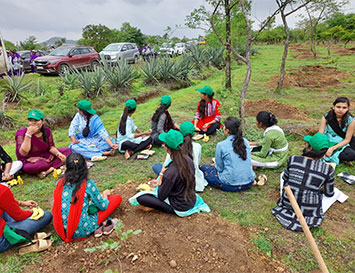
A Shashwat campus is a green campus. Every school plants a mini-forest or Miyawaki patch, vegetable gardens, and compost pits. Bird boxes, butterfly gardens, and tree adoption programs make environment a lived subject. Annual "Van Mahotsav" and nature clubs keep the momentum going.
What makes Project Shashwat different is the link.
When a child learns in a safe classroom, drinks clean water, codes in a computer lab, and goes home to parents with stable income and a village that conserves water — that's Shashwat. That's sustainable.