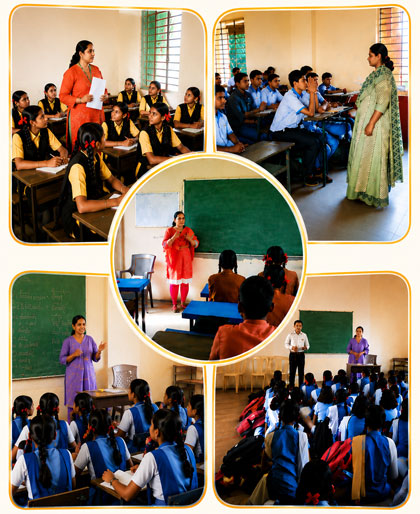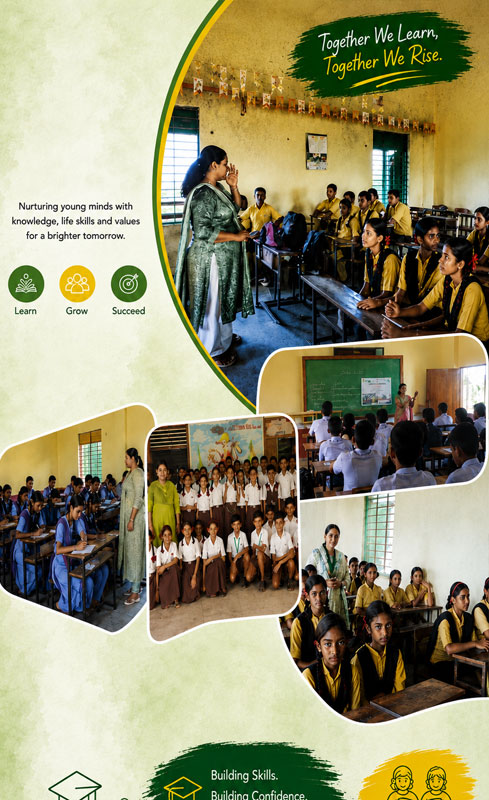
In a constantly changing environment, having life skills is an essential part of being able to meet the challenges of everyday life. The dramatic changes in global economies over the past five years have been matched with the transformation in technology and these are all impacting on education, the workplace and our home life. To cope with the increasing pace and change of modern life, students need new life skills such as the ability to deal with stress and frustration. Today’s students will have many new jobs over the course of their lives, with associated pressures and the need for flexibility In everyday life, the development of life skills helps students to:
Teenage is a period when the intellectual, physical, social, emotional and all the capabilities are very high, but, unfortunately, most of the adolescents are unable to utilize their potential to maximum due to various reasons.
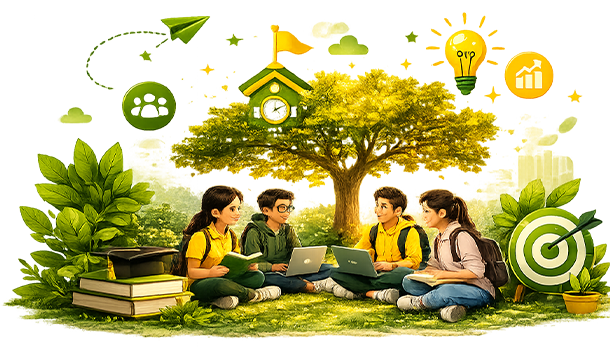
Education’ is important, but education to support and live life better is more important. It has been felt that life skills education bridges the gap between basic functioning and capabilities. It strengthens the ability of an individual to meet the needs and demands of the present society and helps in dealing with the above issues in a manner to get desired behaviour practical. Imparting life skill training through inculcating life skill education will help youth to overcome such difficulties in life.
Overall, life skills education, have found to be an effective psychosocial intervention strategy for promoting positive social, and mental health of adolescents which plays an important role in all aspects such as strengthening coping strategies and developing self-confidence and emotional intelligence, as well as enhancing critical thinking, problem solving, and decision-making skills as has been well documented in the aforementioned studies. Thus, there is, significance and importance of life skills education to be integrated into the regular school curriculum and given on a daily basis by a life skills trainer/ teacher/counsellor to enhance the mental health of students, equip them with better adapted skills to face the challenges of changing life situations and empower them to become fully functioning contributors to the host society in particular and the world in general.
Life skills training/education considers psychosocial competencies and interpersonal skills that help students to take right decisions, solve problems, think critically and creatively, communicate effectively, build healthy relationships, empathize with others, and cope with managing their lives in a healthy and productive manner. (WHO) defines Life skills as the abilities for adaptive and positive behaviour that enable individuals to deal effectively with the demands and challenges of everyday life. Life skill has been classified into three broad categories:
Thinking skills enhance logical ability, analytical thinking, creativity, problem solving and decision making.
Communication, leadership, teamwork, advocacy, cooperation and relationship building.
Emotional intelligence, self-management, coping with stress, emotions and peer pressure.
Imparting ‘Life Skills Education’ in classroom has been researched meticulously. There are various past research indications over life skills being implemented as a training program, as an intervention approach and a model contributing to healthy development of adolescents.

An activity providing opportunities for students to learn and practice turning to one another in solving problems. Enables students to deepen their understanding of the topic and personalize their connection to it. Develops listening, assertiveness and empathy.

Along with being a fun activity involving the whole class, role plays provide an excellent strategy for practicing skills, handling real-life situations, increasing empathy and developing emotional understanding.

Gives students an opportunity to analyse challenges, dilemmas and test solutions safely. Improves critical thinking, decision making, teamwork and problem solving abilities.

Allows students to generate ideas quickly and spontaneously. Helps students think creatively, evaluate ideas and develop innovative solutions through discussion.

Group activities encourage interaction, teamwork, educational games and simulations that combine knowledge, attitude and skills in a safe learning environment.

Story telling develops creativity, concentration, listening skills, patience and critical thinking while helping students discover healthy solutions through meaningful stories.
We believe that sustainable & progressive development of any student is a product of continuous process of interventions and interaction which involves "understanding them, sharing ideas, exploring minds, imbibe values and help them understand their dreams and pathways!" It's a journey which requires continuous partnership, mentoring and guidance and helping them grow healthy physically & emotionally.